Who these iv hydration clinic templates are for
Nurse-owned and physician-supervised IV hydration clinics, including mobile services, offering hydration, vitamin, immunity and wellness infusions and injections. One clinic or a mobile team of 1–6 nurses, membership and package pricing, high share of new clients from social media.
The problems they solve
- Clients arrive from Instagram expecting a wellness service, but each infusion is a medical procedure that needs screening and consent.
- Mobile appointments and no-shows are costly with no deposit or policy in place.
- Good-faith-exam and standing-order documentation is inconsistent across nurses.
- Inventory of IV fluids, vitamins and supplies is not tracked, so waste and stockouts happen.
- Adverse reactions are not documented in a standard way.
What a well-run iv hydration clinic business wants from its paperwork
- Screen every client with a structured intake and health history.
- Obtain treatment-specific informed consent every time.
- Reduce no-shows and protect mobile-visit revenue.
- Standardize daily operations and supply tracking.
- Document incidents, privacy acknowledgments and staff confidentiality.
The complete guide to iv hydration clinic business paperwork
The basics: forms every IV therapy clinic needs before the first drip
IV therapy sits at the intersection of wellness marketing and medical practice. Whatever the branding, an infusion is an invasive procedure with real contraindications (kidney disease, heart failure, certain medications, pregnancy, allergies to components) and real risks (infiltration, phlebitis, allergic reaction). The documentation has to match: a thorough intake and health history, a treatment-specific informed consent, a HIPAA acknowledgment and a financial and cancellation policy.
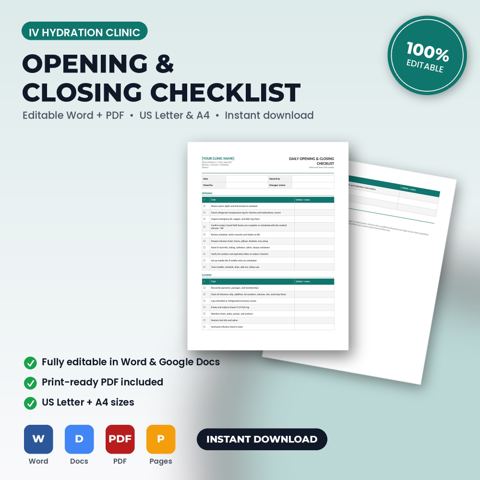
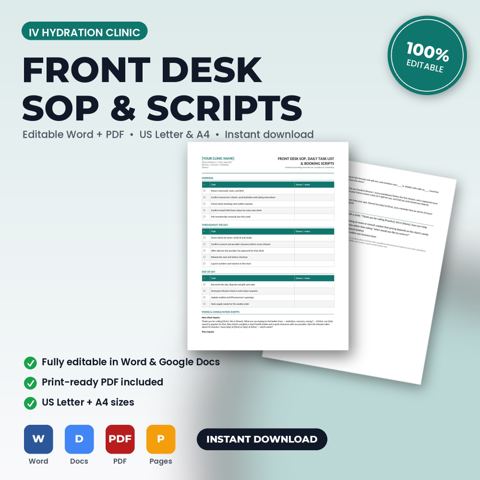
Operationally, clinics and mobile teams need opening and closing checklists (supply checks, refrigeration logs, sharps and waste), a front-desk or booking SOP, appointment message scripts, a supply inventory for fluids, additives and consumables, an incident report and an employee confidentiality agreement.
Templates written for IV clinics include screening questions and consent language that generic clinic forms miss.
Intermediate: screening, consent and protecting appointment revenue
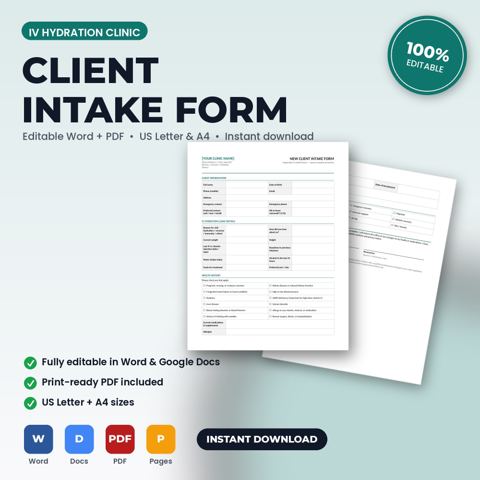
The intake form should capture the medical history a nurse needs to decide whether an infusion is appropriate and which additives are safe, and should prompt the good-faith exam and any standing-order requirements your medical director sets. A structured form makes that consistent across nurses and shifts.
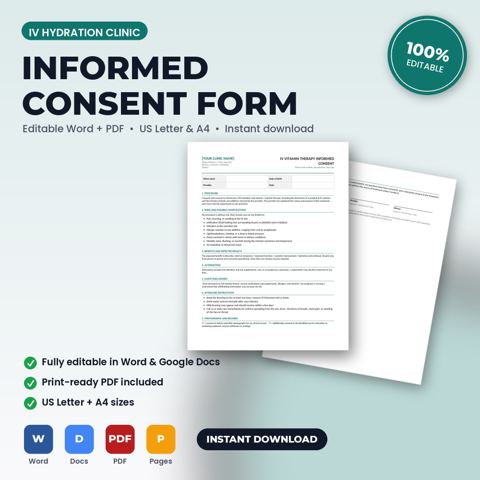
Consent should be treatment-specific: which fluids and additives, the expected effects, common side effects, serious risks, alternatives and the client's aftercare responsibilities. For mobile services, the consent should also address the environment (a home or hotel room) and what happens if the client is unsuitable on arrival.
Mobile no-shows are expensive because a nurse has driven to the address. A cancellation policy with a deposit and a defined notice period, reinforced by confirmation and reminder messages, is the standard fix. Package and membership terms (expiry, refunds, transferability) belong in the financial policy.
Expert: compliance, inventory and incident management
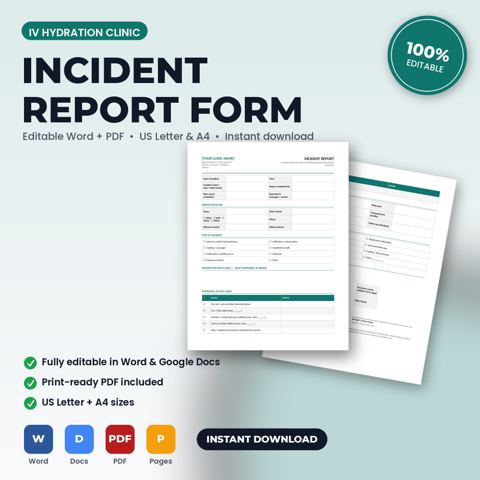
HIPAA acknowledgment, workforce confidentiality agreements and incident reports form the compliance backbone. An incident report template that captures the event, vital signs, interventions, provider notification and follow-up is what a regulator or insurer will ask for after an adverse reaction, and what protects the nurse who handled it well.
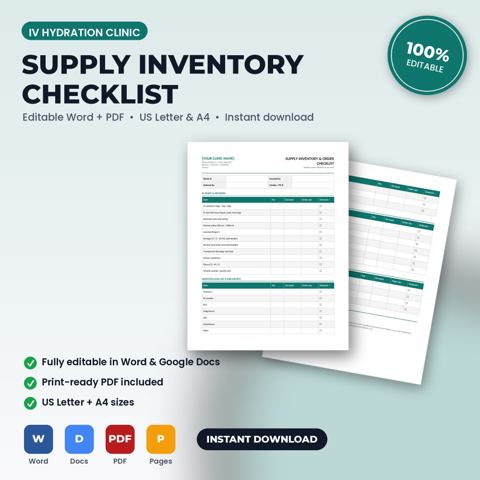
Inventory control matters more in IV therapy than in most clinics: fluids and additives have expiry dates and cold-chain requirements, and waste comes straight out of margin. A supply inventory with par levels, lot numbers and expiry tracking, reviewed in the opening checklist, prevents both stockouts and expired product.
Consistency across a growing nurse team comes from SOPs and checklists. When every visit follows the same intake, consent, procedure, documentation and follow-up sequence, the clinic can add nurses and locations without adding risk, and the feedback survey and review request at the end of the sequence keep the marketing engine running.
Every iv hydration clinic template, explained
- IV Hydration Clinic New Patient / Client Intake & Health History Form — Intake form, $9.99
- IV Hydration Clinic Daily Opening & Closing Checklist — Opening & closing checklist, $8.99
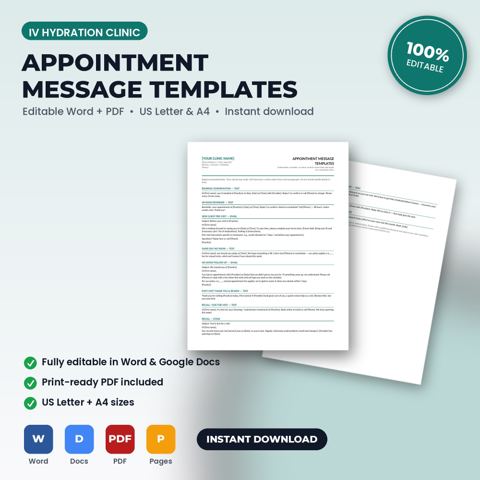
- IV Hydration Clinic Appointment Confirmation, Reminder, No-Show & Recall Message Templates — Appointment message templates, $9.99
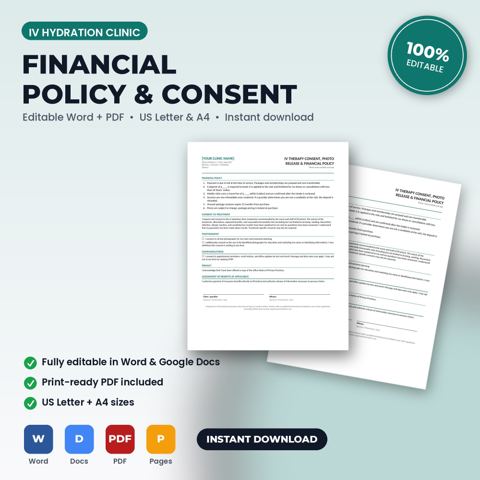
- IV Hydration Clinic Financial Policy, Treatment Consent & Photo Release — Financial policy & consent, $12.99
- IV Hydration Clinic Front Desk SOP, Daily Task List & Phone Scripts — Front desk SOP & scripts, $9.99
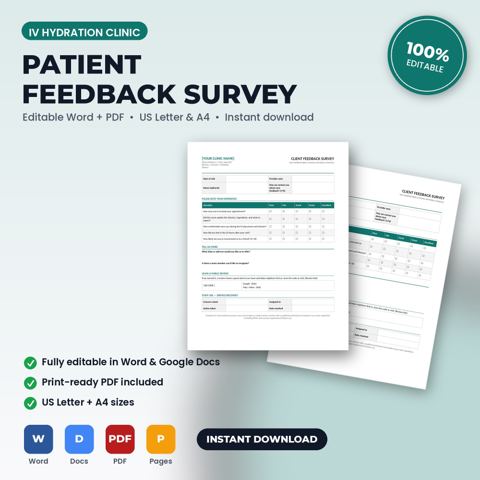
- IV Hydration Clinic Feedback Survey & Review Request Form — Feedback survey & review request, $8.99
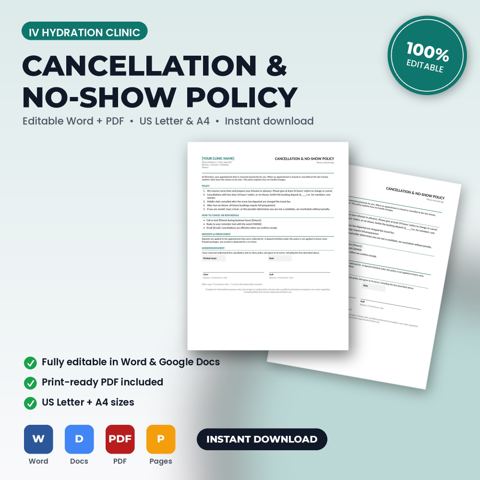
- IV Hydration Clinic Cancellation & No-Show Policy — Cancellation & no-show policy, $9.99
- IV Hydration Clinic Supply Inventory & Order Checklist — Supply inventory, $8.99
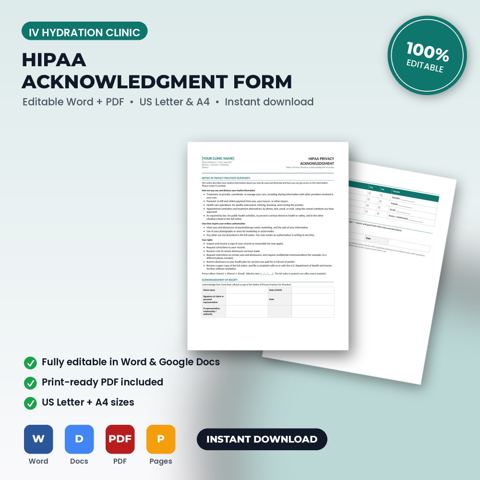
- IV Hydration Clinic HIPAA Notice of Privacy Practices Acknowledgment & Communication Consent — HIPAA acknowledgment, $9.99
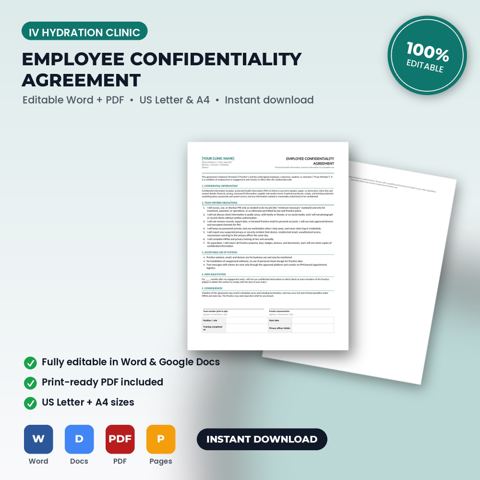
- IV Hydration Clinic Employee Confidentiality & HIPAA Agreement — Employee confidentiality agreement, $12.99
- IV Hydration Clinic Incident & Adverse Event Report Form — Incident & adverse event report, $9.99
- IV Hydration Clinic Treatment-Specific Informed Consent Form — Treatment-specific informed consent, $14.99
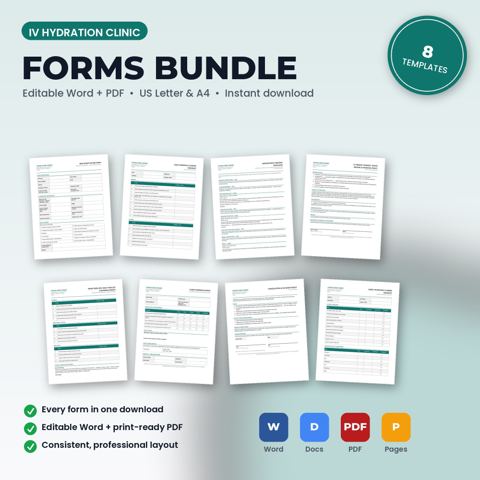
- IV Hydration Clinic Forms Bundle — Forms bundle, $34.99
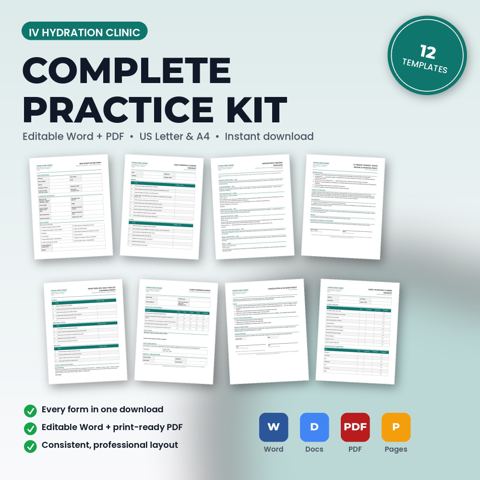
- IV Hydration Clinic Complete Practice Kit — Complete kit, $69.99