Who these locksmith templates are for
Independent locksmiths and small security-hardware companies doing residential, commercial, automotive and access-control work. Solo mobile locksmith to a shop with three or four techs; mix of emergency calls and scheduled commercial work.
The problems they solve
- Opening a door or a vehicle for someone who turned out not to be authorized is a liability nightmare with no paper trail.
- Key control and master-key systems create long-term responsibility with no signed record of who holds what.
- Emergency calls end with price disputes because nothing was quoted or authorized before work began.
- Commercial access-control proposals get lost to bigger integrators because they look unprofessional.
- Pricing for after-hours, drive time and specialty tools is inconsistent.
What a well-run locksmith business wants from its paperwork
- Verify and document authorization before every entry, rekey or key duplication.
- Maintain a defensible key control log and master-key agreement for commercial accounts.
- Quote and authorize on site, including emergency surcharges.
- Win access-control and commercial contracts with a professional proposal.
- Price every service type with a known margin.
The complete guide to locksmith business paperwork
The basics: why locksmiths need more paperwork than most trades
A locksmith's product is trust. Every job involves granting access to property or duplicating keys, and the legal exposure if that access goes to the wrong person is significant. That makes three documents essential before any other: a service authorization form with identity verification, a key control log and, for commercial systems, a master key agreement. Add the standard business set (intake, estimate, invoice, service agreement, service report, follow-up messages) and you have a complete system.
Regulators in many states require locksmiths to verify identity and keep records of certain jobs. Even where they do not, insurers and commercial clients expect it. A signed authorization with ID details, a description of the property or vehicle and the work performed is your first line of defense.
Templates written specifically for locksmith work include those fields; generic invoice templates do not.
Intermediate: authorization, vehicle release and emergency pricing
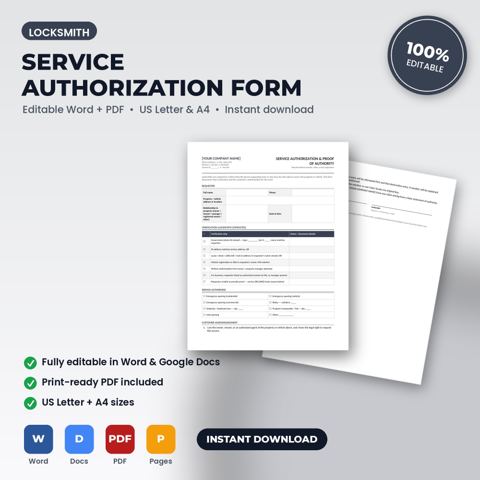
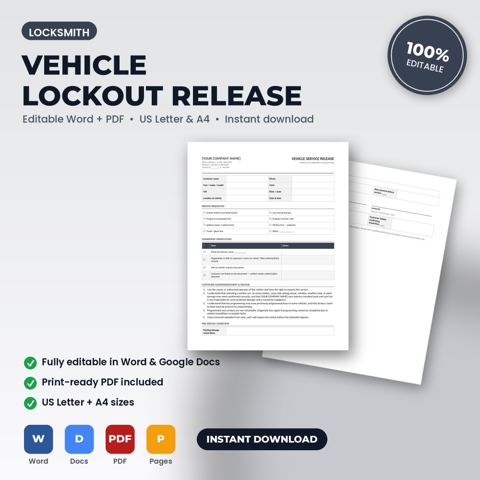
For lockouts and vehicle entry, use a form that captures the customer's name, ID type and number, proof of ownership or right to access, vehicle VIN or plate, and a signed statement of authority. Your vehicle release form should also record the vehicle's condition and any pre-existing damage before you start, because the scratch on the door will be blamed on you afterwards.
Emergency and after-hours work should be quoted on the phone, confirmed on arrival on a written estimate and authorized by signature before the first tool comes out. State the trip charge, the after-hours surcharge and the labor rate separately. Customers accept surcharges they were told about and dispute the ones they discover on the invoice.
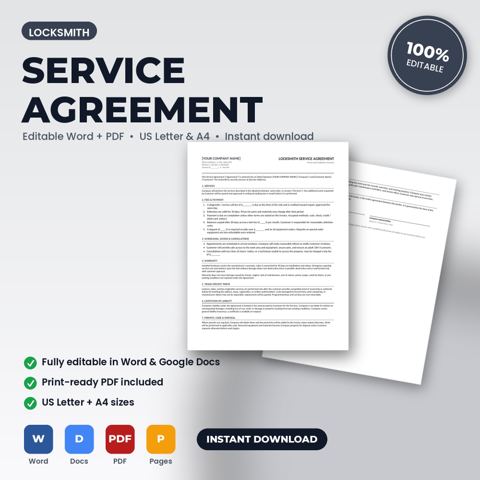
Your service agreement should include warranty terms for hardware (manufacturer) versus workmanship (yours), exclusions for customer-supplied locks and clear language about what happens when a lock cannot be opened non-destructively.
Expert: key control systems, master keying and access-control proposals
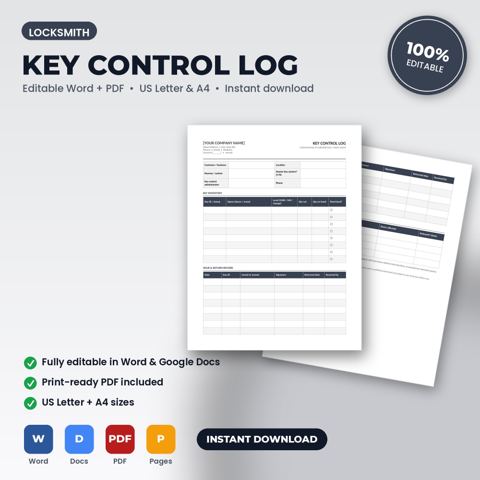
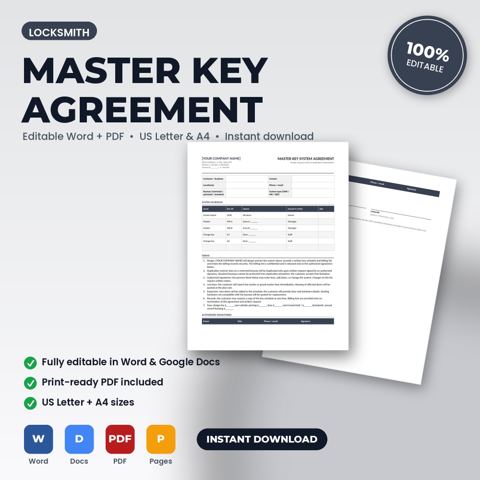
Commercial accounts pay for control. A key control log that records every key issued, by whom, to whom, with a signature and a return date, and a master key agreement that defines the system owner, who may authorize duplicates, how lost keys are handled and how the system is maintained, turn a one-time rekey into a long-term account. These documents are also what protects you when a key goes missing.
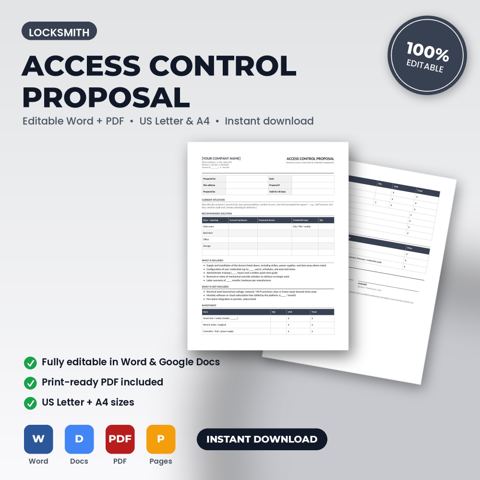
Access-control proposals (readers, controllers, credentials, software, installation, training and support) compete with large integrators. A structured proposal that explains the system in plain language, itemizes hardware and labor, states what the client provides (network, power, doors) and includes support terms wins jobs that a handwritten quote loses.
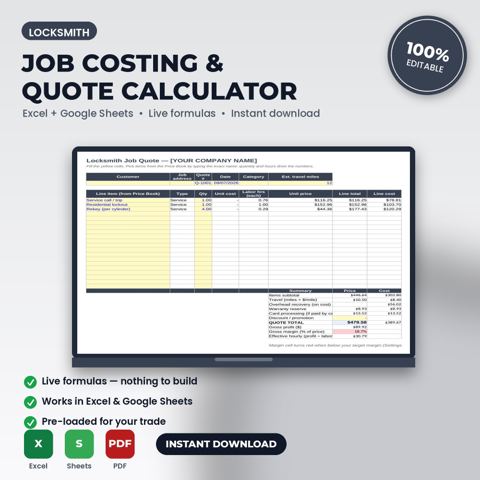
Job costing for locksmiths must include drive time, after-hours labor, specialty tool amortization (key programmers, key machines) and hardware markup. A workbook that models these shows which services deserve a price increase. Automotive programming and commercial hardware are frequently underpriced relative to the tool investment behind them.
Every locksmith template, explained
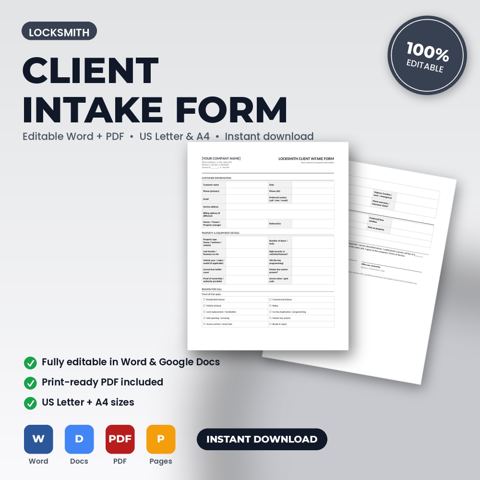
- Locksmith Client Intake & Property Information Form — Intake form, $7.99
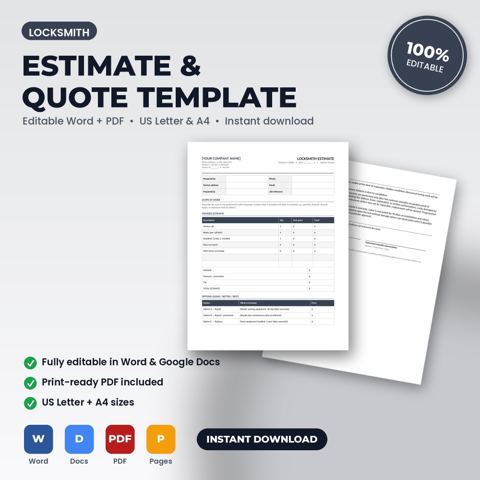
- Locksmith Service Estimate / Quote Template — Estimate / quote, $8.99
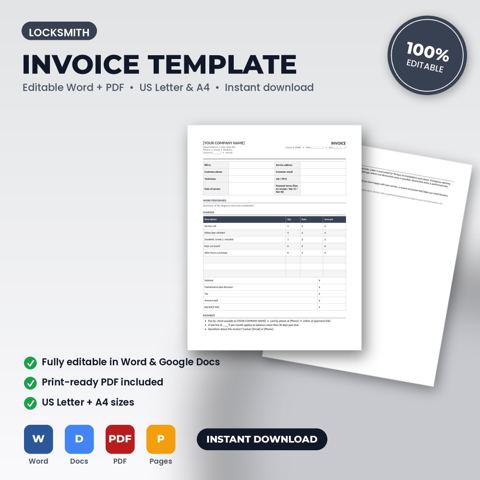
- Locksmith Invoice Template — Invoice, $7.99
- Locksmith Service Agreement & Terms of Service — Service agreement, $9.99
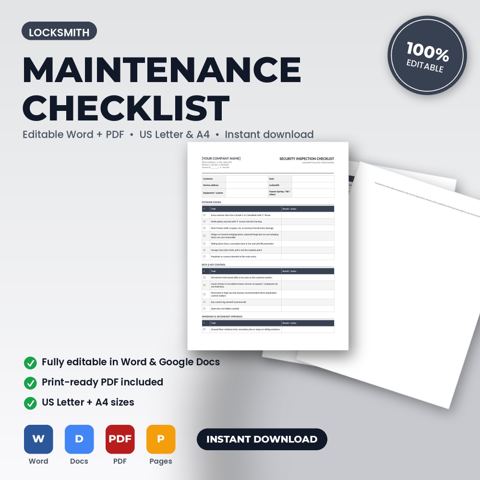
- Locksmith Seasonal Maintenance & Inspection Checklist — Inspection checklist, $7.99
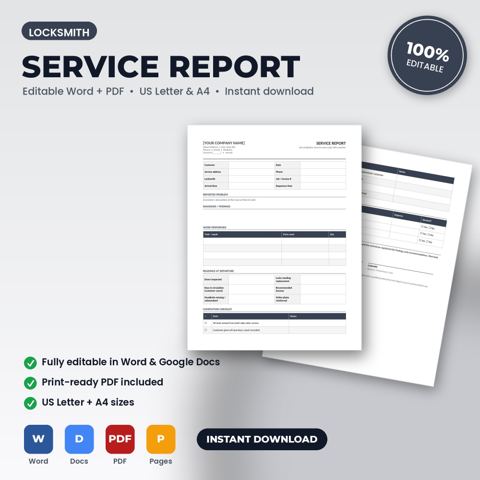
- Locksmith Job Completion Service Report — Service report, $7.99
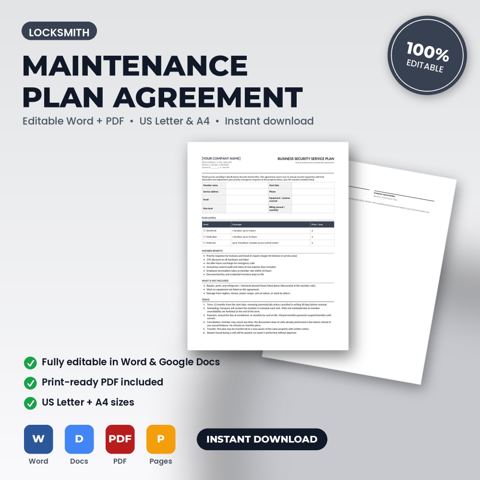
- Locksmith Maintenance Plan Membership Agreement — Maintenance plan agreement, $9.99
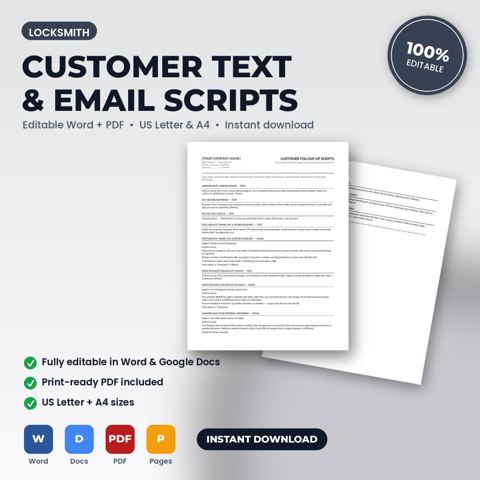
- Locksmith Customer Follow-Up, Reminder & Review Request Scripts — Follow-up & review scripts, $8.99
- Locksmith Service Authorization & Proof of Ownership Form — Service authorization & ID verification, $8.99
- Locksmith Commercial Key Control Log — Key control log, $7.99
- Locksmith Vehicle Lockout & Key Programming Release — Vehicle entry & key release, $8.99
- Locksmith Master Key System Agreement — Master key system agreement, $9.99
- Locksmith Access Control & Smart Lock Proposal — Access control proposal, $9.99
- Locksmith Job Costing & Quote Calculator Spreadsheet — Job costing & quote calculator, $16.99
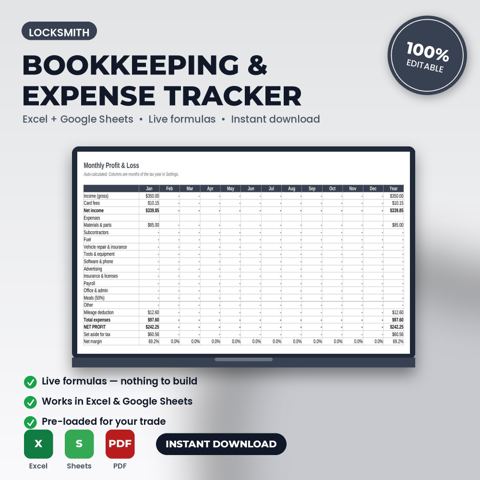
- Locksmith Bookkeeping, Expense & Mileage Tracker Spreadsheet — Bookkeeping & P&L tracker, $14.99
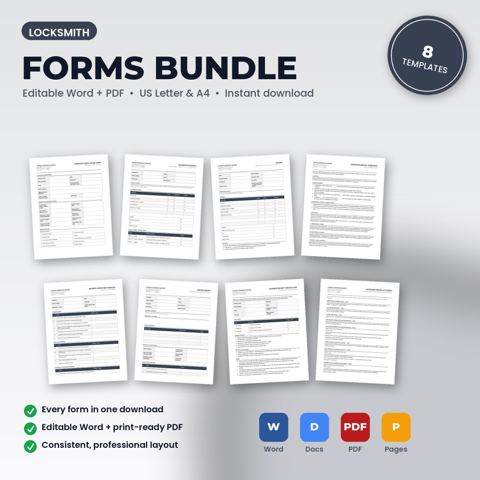
- Locksmith Business Forms Bundle — Forms bundle, $34.99
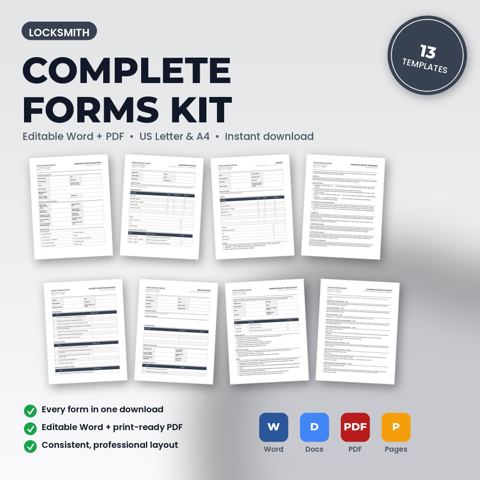
- Locksmith Complete Business Forms Kit — Complete kit, $59.99