
Who these hvac templates are for
Owner-operators and small HVAC companies (1–10 technicians) doing residential and light-commercial service, repair, installs and maintenance agreements. Typically $150k–$3M in annual revenue, one office person or a spouse handling admin, quotes written in the truck.
The problems they solve
- Quotes get written on a notepad or a generic invoice app, so pricing is inconsistent and margins are guessed, not known.
- Customers dispute charges after the fact because there was no signed authorization or clear terms.
- Maintenance-plan revenue is left on the table because there is no agreement to hand the customer at the end of a service call.
- Callbacks and warranty arguments happen because the tech never documented what was checked and what the readings were.
- Follow-up, reminders and review requests only happen when someone remembers.
What a well-run hvac business wants from its paperwork
- Look as professional as the big franchise competitors without paying for franchise software.
- Get paid faster with clear invoices and signed agreements.
- Turn one-time repair customers into recurring maintenance-plan members.
- Protect the business from liability with plain-language terms customers actually sign.
- Know the real margin on every job before quoting it.
The complete guide to hvac business paperwork
The basics: what paperwork an HVAC business actually needs
Every HVAC company, from a one-truck startup to a ten-tech shop, runs on the same handful of documents. Before the job: a client intake form and a written estimate. During the job: a service authorization and, for larger work, a service agreement with terms. After the job: an invoice, a completion report and a follow-up message. Around all of it: a maintenance-plan agreement that converts the repair customer into recurring revenue, and a bookkeeping system that tells you whether any of it made money.
The mistake most new contractors make is treating these as separate chores. They are one system. The intake form feeds the estimate, the estimate becomes the invoice, the invoice references the agreement, and the completion report becomes the maintenance-plan pitch. When the documents share a header, a job number and the same wording, customers experience a professional company rather than a person with a truck.
You do not need field-service software to get there. Well-designed Word and Excel templates, edited once with your company details, cover 90% of what a small shop needs and cost less than one month of a software subscription.
Intermediate: pricing, terms and getting paid on time
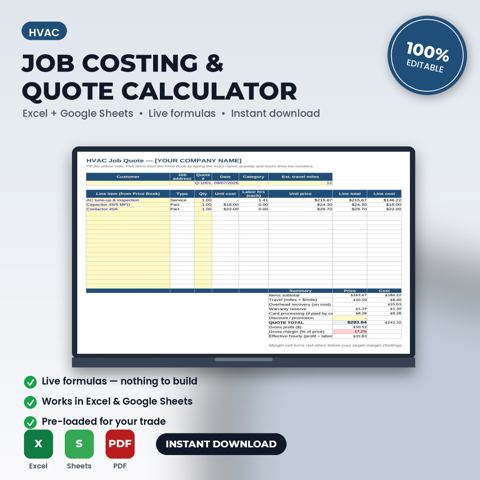
Flat-rate pricing wins in residential HVAC because customers want a number before you start, and because it lets you price for value rather than hours. A job-costing spreadsheet with your true labor cost (wages plus burden), overhead per billable hour, parts markup and target margin produces flat-rate prices you can defend. Put those prices in a price book so every tech quotes the same way.
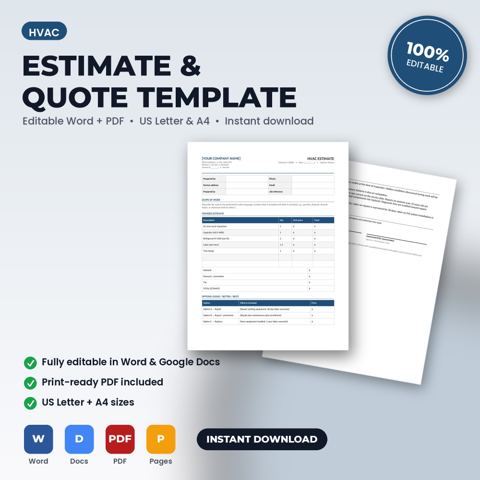
Your estimate should show scope, price, what is excluded, how long the quote is valid and what happens if hidden conditions appear (a rusted-out plenum, a non-code electrical disconnect). A short signed acceptance line on the estimate is the difference between a collectable invoice and a dispute.
Service agreements do the heavy lifting on liability. Payment terms, late fees, warranty scope (labor vs. parts, manufacturer vs. yours), refrigerant and permit responsibilities, access requirements and a limitation-of-liability clause are standard. Keep the language plain: a customer who understands what they signed rarely fights it later.
Expert: building recurring revenue and a documented service history
Maintenance-plan membership is the most valuable asset an HVAC company can build. A plan that includes two tune-ups a year, priority scheduling and a repair discount creates predictable spring and fall revenue, smooths the summer/winter cash swings and raises the resale value of the business. The pitch happens at the end of a service call, with a one-page agreement in the tech's hand. Without the document, the pitch does not happen.
Seasonal inspection checklists turn a 'tune-up' from a vague visit into a documented set of readings: static pressure, temperature split, capacitor microfarads, refrigerant pressures, amp draws, flue draft, condensate flow. Recorded numbers justify replacement recommendations, protect you from callback disputes and give the next tech a history to work from.
Finally, close the loop. A job completion report the customer signs, a same-day thank-you message, a review request three days later and a recall message before the next season are the four touches that produce referrals. Scripted messages mean they happen every time, not only when the office is quiet.
Every hvac template, explained
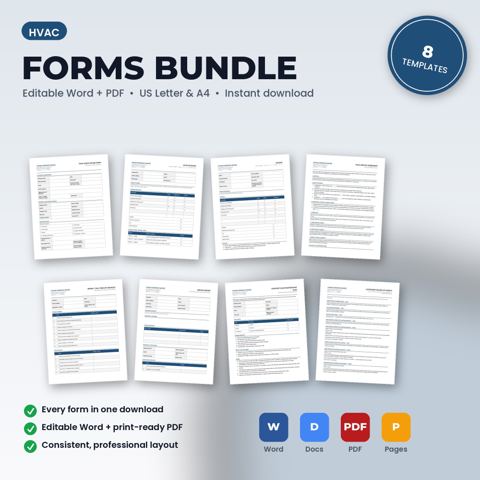
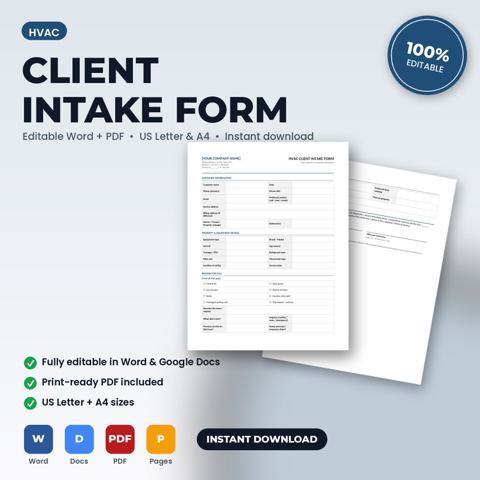
- HVAC Client Intake & Property Information Form — Intake form, $7.99
- HVAC Service Estimate / Quote Template — Estimate / quote, $8.99
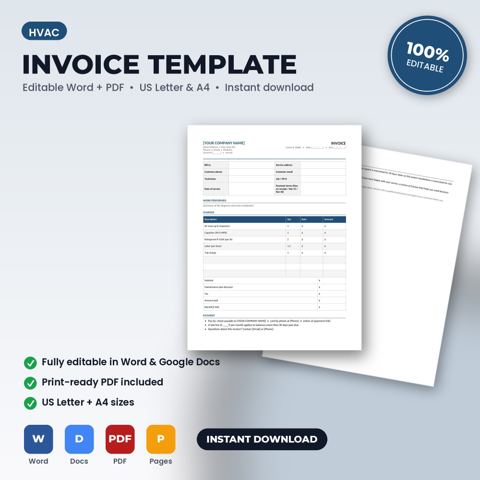
- HVAC Invoice Template — Invoice, $7.99
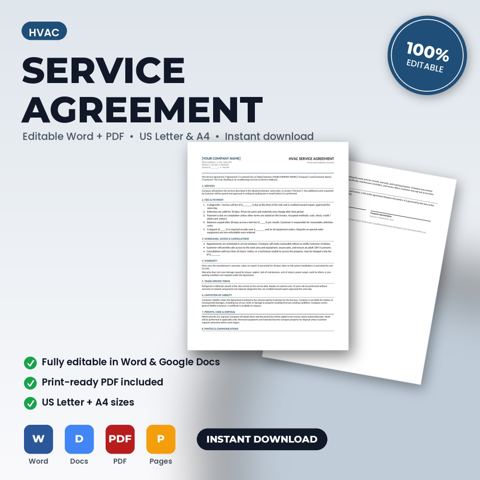
- HVAC Service Agreement & Terms of Service — Service agreement, $9.99
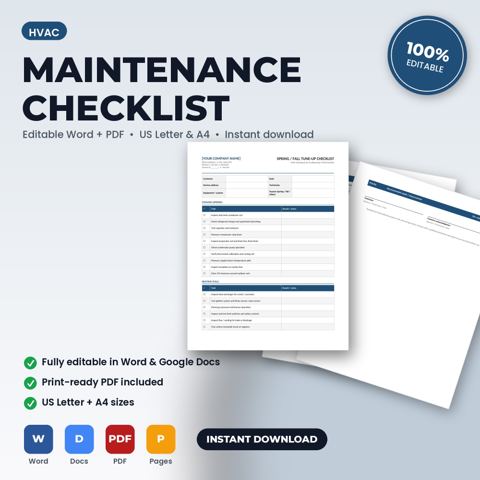
- HVAC Seasonal Maintenance & Inspection Checklist — Inspection checklist, $7.99
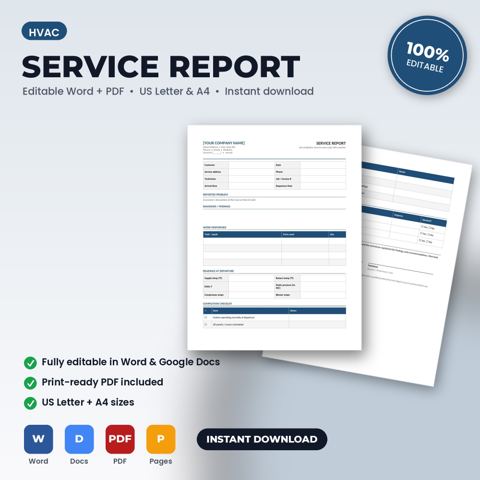
- HVAC Job Completion Service Report — Service report, $7.99
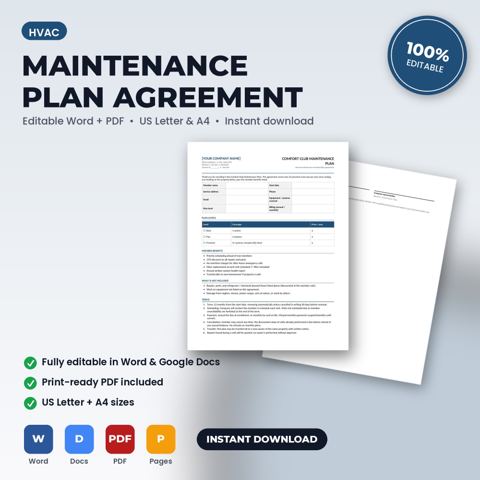
- HVAC Maintenance Plan Membership Agreement — Maintenance plan agreement, $9.99
- HVAC Customer Follow-Up, Reminder & Review Request Scripts — Follow-up & review scripts, $8.99
- HVAC Business Forms Bundle — Forms bundle, $34.99
- HVAC Job Costing & Quote Calculator Spreadsheet — Job costing & quote calculator, $16.99
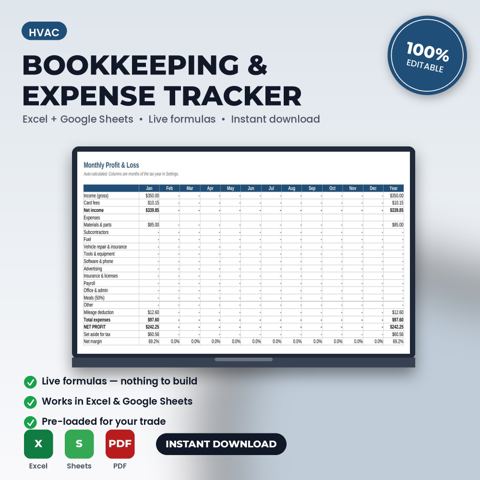
- HVAC Bookkeeping, Expense & Mileage Tracker Spreadsheet — Bookkeeping & P&L tracker, $14.99