Who these pest control templates are for
Licensed pest control operators running their own company: general pest routes, termite work, wildlife exclusion and one-time treatments. One to six technicians, recurring quarterly or monthly accounts as the base, plus seasonal spikes.
The problems they solve
- State regulators and customers both expect a written record of what was applied, where and at what rate.
- Customers cancel recurring service and demand refunds with no agreement to point to.
- Bed bug and termite jobs turn into disputes when expectations about preparation and re-treatment were not written down.
- Quotes vary by technician and rarely reflect the real cost of product, drive time and re-service visits.
- Follow-ups and renewals depend on the office remembering.
What a well-run pest control business wants from its paperwork
- Have a compliant treatment record and inspection report for every visit.
- Lock in recurring revenue with a clear service agreement and renewal terms.
- Set preparation and re-treatment expectations in writing before the job.
- Price by job type with a known margin.
- Automate reminders, renewals and review requests.
The complete guide to pest control business paperwork
The basics: what a pest control business must document
Pest control is one of the most document-dependent trades. Regulators expect a service record showing the target pest, product, EPA registration number, application rate, areas treated and technician license. Customers expect a written agreement that defines what is covered, how often you come and what happens when the pests come back. Both expect a professional inspection report when you find termites or conditions conducive to infestation.
The core stack is therefore: intake form, inspection checklist and report, estimate with a signed authorization, service agreement, per-visit treatment/service report, invoice and follow-up messages. Each should carry your license number and the company header.
Editable templates written for pest work include the fields that generic forms lack: target pests, product and rate, monitoring device counts, conducive conditions and re-treatment terms.
Intermediate: agreements that survive cancellations and re-treatments
The recurring-service agreement is where pest companies protect their revenue. It should state the initial service and the recurring frequency, the pests covered and those excluded (termites, bed bugs and wildlife are usually separate), the re-treatment guarantee and its conditions, customer preparation responsibilities, access requirements, price changes and the cancellation notice period. A customer who signed those terms rarely disputes the final invoice.
For bed bug and termite jobs, the estimate and agreement should describe preparation steps in detail, define how many follow-up visits are included and state clearly that success depends on the customer following the prep list. Written expectations are the difference between a satisfied customer and a chargeback.
Invoices should reference the agreement or the estimate, list the service performed and the products used, and show recurring charges separately from one-time work.
Expert: inspection reports, service plans and pricing for margin
A structured inspection checklist and report is both a compliance record and a sales tool. Recording moisture readings, wood-destroying-insect evidence, harborage areas, entry points and conducive conditions gives you documented reasons to recommend exclusion work, moisture correction and monitoring, and gives the customer confidence that the recommendation is based on findings rather than a sales quota.
Tiered service plans (quarterly general pest, plus rodent monitoring, plus mosquito season, plus termite monitoring) raise revenue per account. A plan agreement template with clear tiers lets a technician upgrade the customer on site.
Job costing in pest control has to include product cost per application, drive time, re-service visits and equipment amortization. A spreadsheet that models these per job type reveals which services are underpriced. Many operators learn that one-time treatments with a free re-service are unprofitable and that quarterly plans priced 15% higher lose almost no customers.
Every pest control template, explained
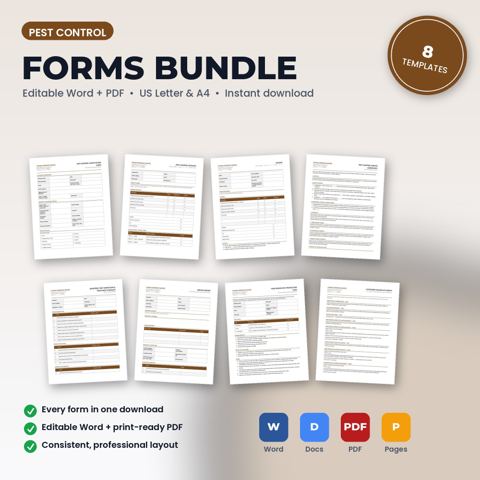
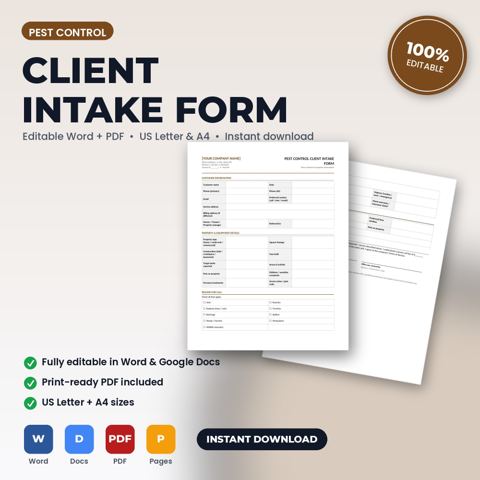
- Pest Control Client Intake & Property Information Form — Intake form, $7.99
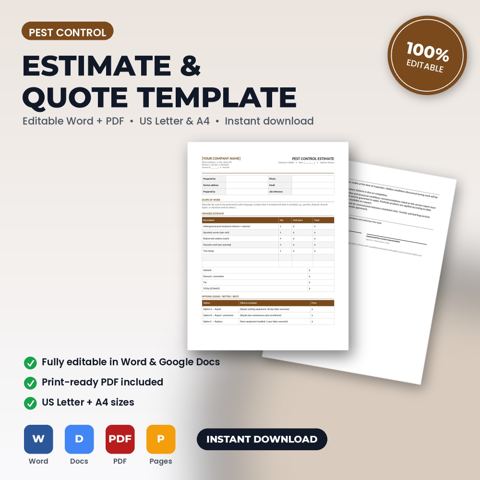
- Pest Control Service Estimate / Quote Template — Estimate / quote, $8.99
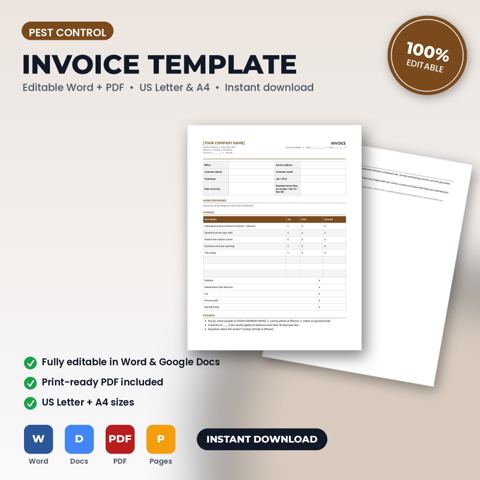
- Pest Control Invoice Template — Invoice, $7.99
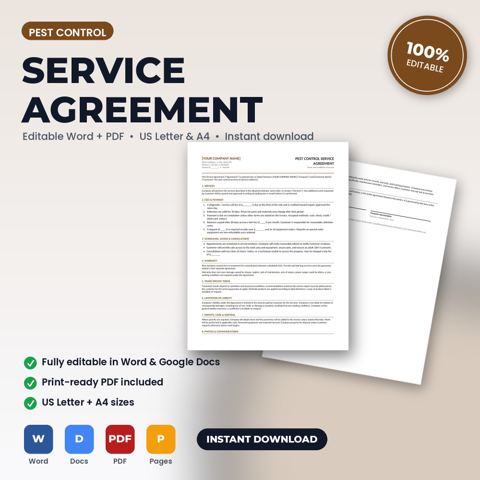
- Pest Control Service Agreement & Terms of Service — Service agreement, $9.99
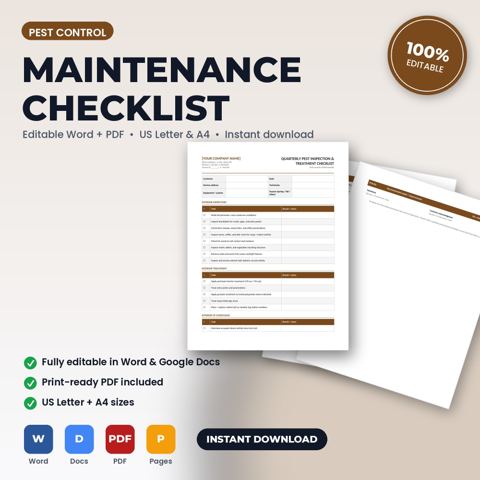
- Pest Control Seasonal Maintenance & Inspection Checklist — Inspection checklist, $7.99
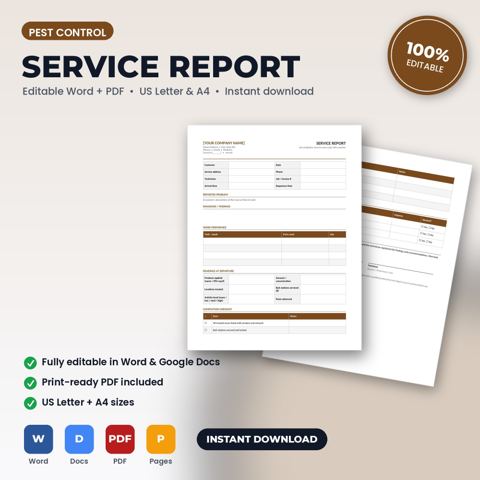
- Pest Control Job Completion Service Report — Service report, $7.99
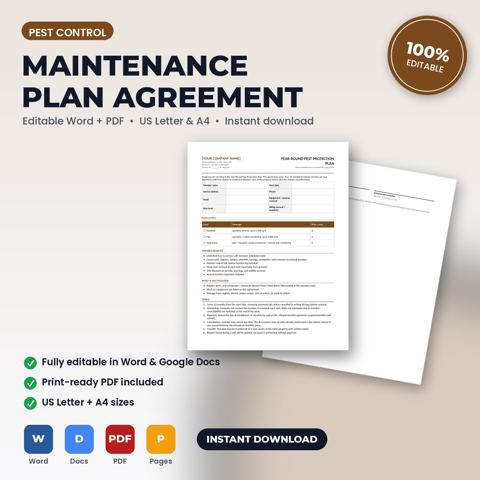
- Pest Control Maintenance Plan Membership Agreement — Maintenance plan agreement, $9.99
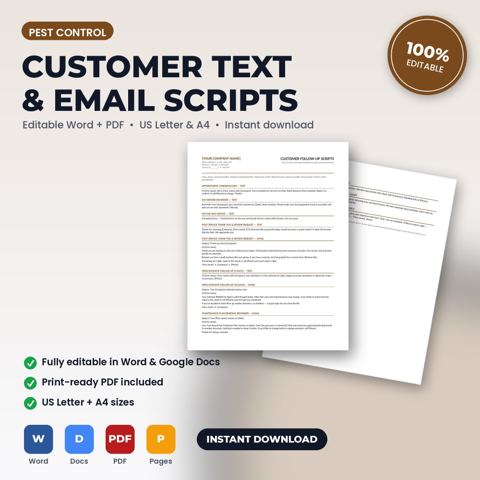
- Pest Control Customer Follow-Up, Reminder & Review Request Scripts — Follow-up & review scripts, $8.99
- Pest Control Business Forms Bundle — Forms bundle, $34.99
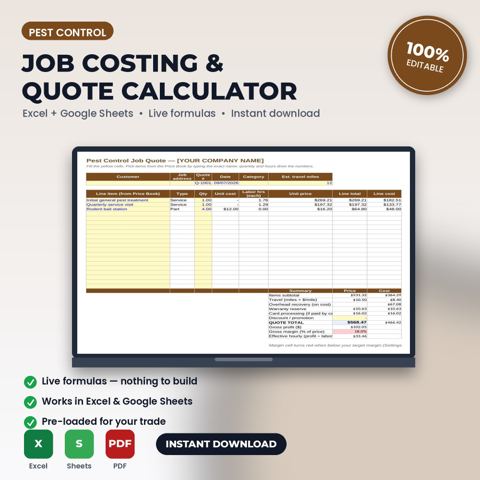
- Pest Control Job Costing & Quote Calculator Spreadsheet — Job costing & quote calculator, $16.99
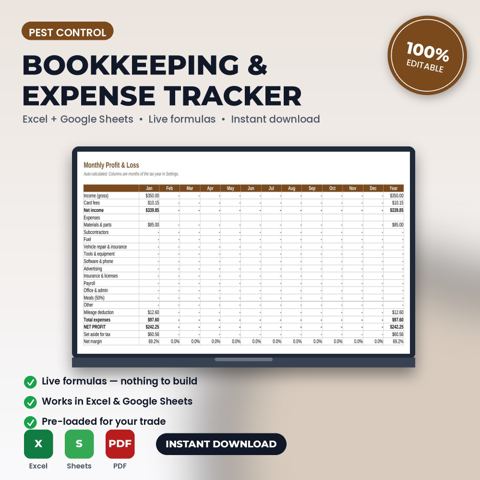
- Pest Control Bookkeeping, Expense & Mileage Tracker Spreadsheet — Bookkeeping & P&L tracker, $14.99