
Who these plumbing templates are for
Licensed plumbers running their own company, from a solo van to a small crew, doing residential service, repairs, drain work, water heaters, remodels and light commercial. Solo to 8 employees, often family-run, quotes produced on site, invoices sent same day or at month end.
The problems they solve
- Emergency calls at odd hours get done first and papered later, and the paperwork often never happens.
- Customers balk at the price after the work is done because nothing was authorized in writing.
- Warranty disputes on fixtures the customer supplied or on drain work that re-clogs.
- No consistent way to price jobs, so the estimate depends on which plumber wrote it.
- Reviews and repeat business depend on memory rather than a process.
What a well-run plumbing business wants from its paperwork
- Quote accurately on site and get a signature before touching a pipe.
- Send clean, branded invoices that get paid without chasing.
- Protect the business with clear terms around customer-supplied parts, access and hidden conditions.
- Build maintenance-plan revenue (water heater flushes, drain maintenance, backflow testing).
- Know the margin on every job type.
The complete guide to plumbing business paperwork
The basics: the plumbing paperwork stack
A plumbing business needs a short, consistent set of documents: an intake form that captures the property, the fixture, the symptom and the access details; an estimate with a signed acceptance; an invoice that matches the estimate line for line; a service agreement for larger or recurring work; a completion report for anything that involved a camera inspection, pressure test or code item; and follow-up messages that ask for the review while the customer is still grateful.
Because plumbing work is often urgent, the intake form matters more than in most trades. A two-minute phone intake (where is the shutoff, is water currently off, how old is the heater, gas or electric, who will be home) prevents wasted trips and lets the plumber arrive with the right parts.
Templates in Word and PDF are the fastest path to this stack. Replace the bracketed placeholders once, save a company version and every document afterwards carries your license number, logo and terms.
Intermediate: quoting hidden conditions and protecting the warranty
Plumbing quotes fail on hidden conditions: the corroded shutoff that snaps, the galvanized line behind the wall, the cast iron that crumbles at the first cut. A good estimate states what is included, what is excluded and how additional work will be priced and authorized. It also states the customer's responsibilities: clear access, pets secured, water shut off at the agreed time.
Warranty language should distinguish your labor warranty from the manufacturer's part warranty, exclude customer-supplied fixtures and be explicit about drain work, where recurrence is common and rarely the plumber's fault. A service agreement with these clauses, signed at the start of larger jobs, prevents the most expensive arguments.
Invoices should reference the estimate, itemize labor and materials, show the permit fee separately where applicable, and state the payment due date and late fee. A clean invoice is paid faster; a clean invoice that references a signed estimate is paid without discussion.
Expert: maintenance plans, service history and pricing for profit
Recurring revenue in plumbing comes from annual water heater flushes, drain maintenance for restaurants and rental properties, backflow prevention testing and whole-home plumbing inspections. A maintenance-plan agreement with a fixed annual fee, priority scheduling and a repair discount gives the plumber a reason to come back and the customer a reason to call you first.
An inspection checklist creates the service history that makes those plans valuable: water pressure, heater age and anode condition, visible leaks, shutoff valve operation, drain flow, water quality notes. Recorded once a year, it drives replacement recommendations that customers accept because they have seen the trend.
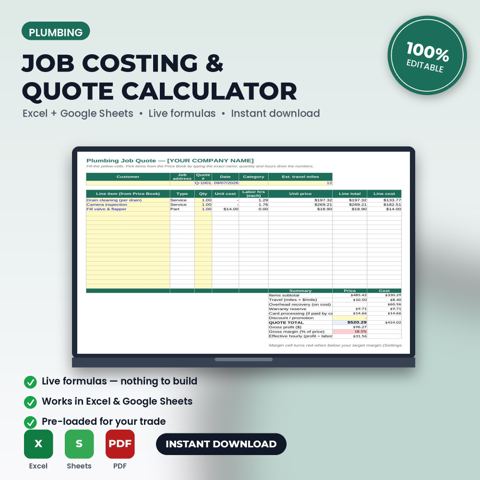
Job costing closes the loop. A spreadsheet with your true labor cost, van and overhead cost per hour, material markup and target margin shows which job types actually make money. Most plumbers discover that emergency calls are underpriced and that fixture installs with customer-supplied parts lose money. Pricing changes follow from data, not from guesswork.
Every plumbing template, explained
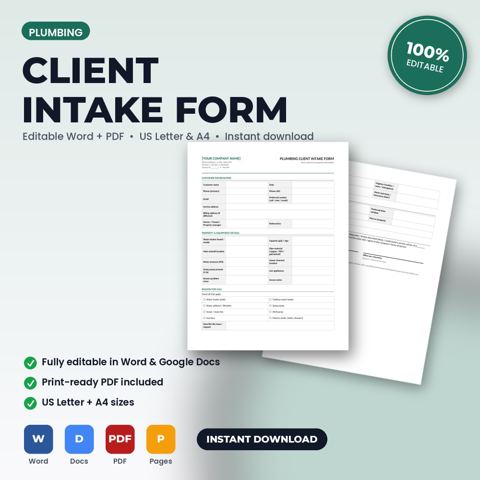
- Plumbing Client Intake & Property Information Form — Intake form, $7.99
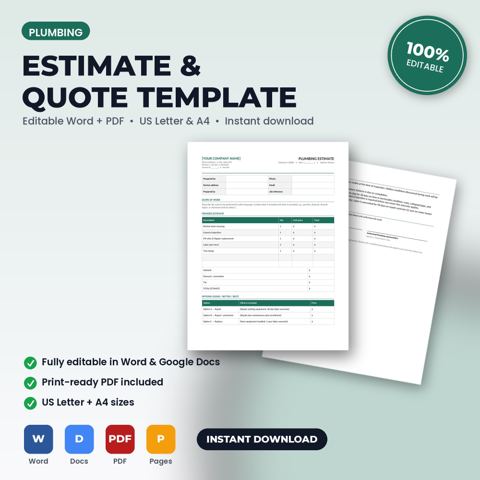
- Plumbing Service Estimate / Quote Template — Estimate / quote, $8.99
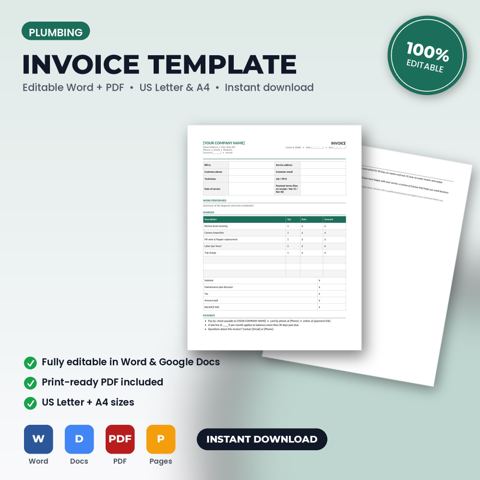
- Plumbing Invoice Template — Invoice, $7.99
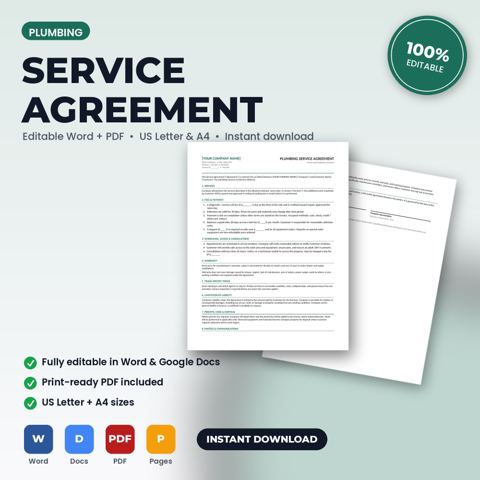
- Plumbing Service Agreement & Terms of Service — Service agreement, $9.99
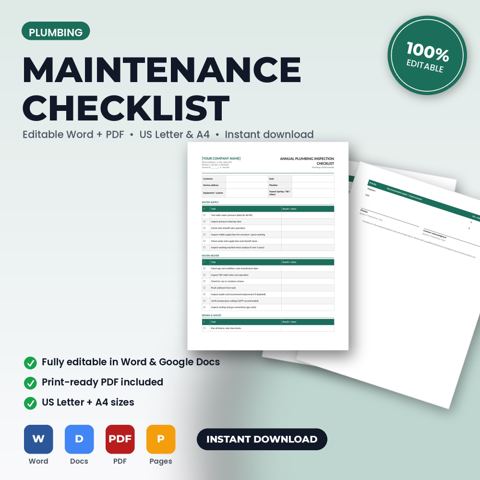
- Plumbing Seasonal Maintenance & Inspection Checklist — Inspection checklist, $7.99
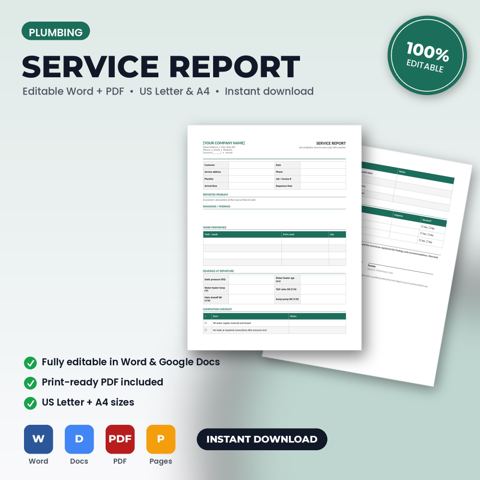
- Plumbing Job Completion Service Report — Service report, $7.99
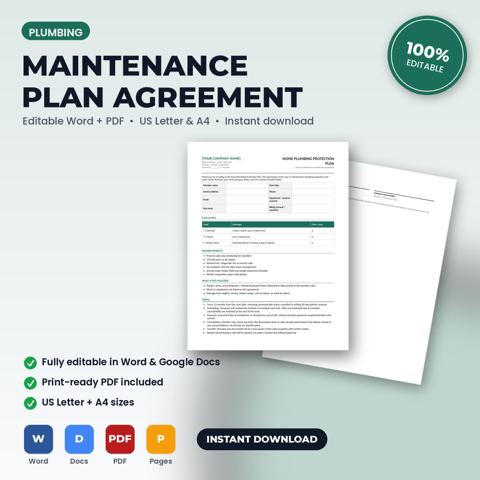
- Plumbing Maintenance Plan Membership Agreement — Maintenance plan agreement, $9.99
- Plumbing Customer Follow-Up, Reminder & Review Request Scripts — Follow-up & review scripts, $8.99
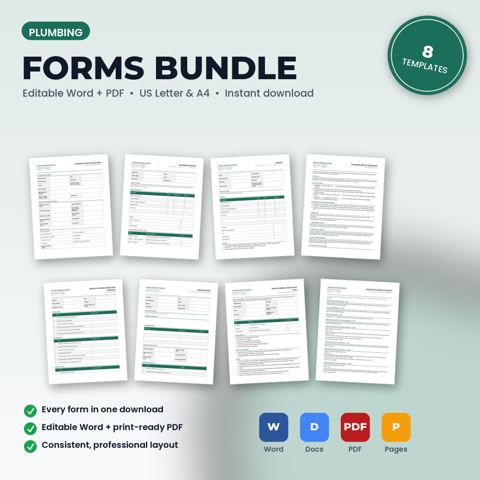
- Plumbing Business Forms Bundle — Forms bundle, $34.99
- Plumbing Job Costing & Quote Calculator Spreadsheet — Job costing & quote calculator, $16.99
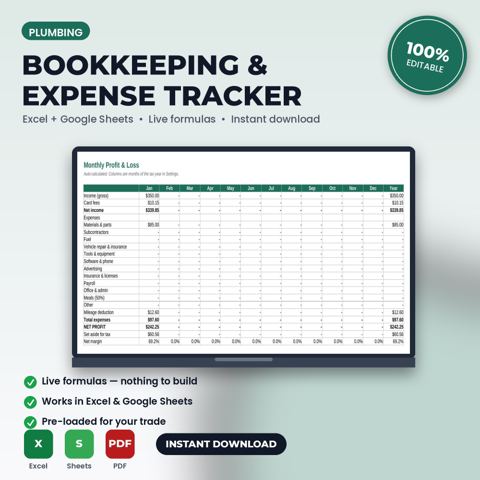
- Plumbing Bookkeeping, Expense & Mileage Tracker Spreadsheet — Bookkeeping & P&L tracker, $14.99