Who these physical therapy clinic templates are for
Owners and office managers of private outpatient physical therapy clinics, including cash-based and hybrid practices, who manage their own forms. One or two locations, 2–10 therapists, plan-of-care based scheduling where attendance drives both outcomes and revenue.
The problems they solve
- Missed visits break the plan of care and the revenue projection, and the no-show policy is not signed or enforced.
- Intake forms do not capture the functional history and outcome baseline the evaluation needs.
- Consent to treat is a line on a registration form, not a real informed consent.
- Front desk turnover means insurance verification and scheduling rules are re-learned repeatedly.
- HIPAA acknowledgments and staff confidentiality paperwork are incomplete.
What a well-run physical therapy clinic business wants from its paperwork
- A complete new-patient packet that supports the evaluation and the billing.
- A signed attendance policy backed by reminder scripts.
- Documented informed consent for treatment, including manual therapy and dry needling where offered.
- Front-desk SOPs and daily checklists that survive staff changes.
- A consistent feedback and review process.
The complete guide to physical therapy clinic business paperwork
The basics: the PT new-patient packet
An outpatient PT clinic's packet has to serve three purposes at once: give the therapist the history needed for the evaluation, set the financial and attendance expectations that a plan of care depends on, and document consent and privacy acknowledgment. The core documents are the intake and health history, informed consent, financial policy, HIPAA acknowledgment and cancellation/no-show policy.
Operational documents complete the system: front-desk SOP (intake, verification, scheduling rules, check-out), opening and closing checklists (equipment, modalities, cleaning, cash), appointment message scripts, a supply inventory, an incident report and an employee confidentiality agreement.
Editable templates written for PT include functional history, pain and activity baseline sections and attendance language that general medical forms lack.
Intermediate: attendance, consent and financial clarity
Attendance is the clinical and financial engine of PT. A plan of care of twelve visits only works if the patient comes to twelve visits. The cancellation policy should be signed at intake, state the notice period and fee, and be reinforced by confirmation and reminder messages that emphasize the patient's progress rather than the clinic's schedule. Clinics that implement this typically see a meaningful drop in missed visits within a quarter.
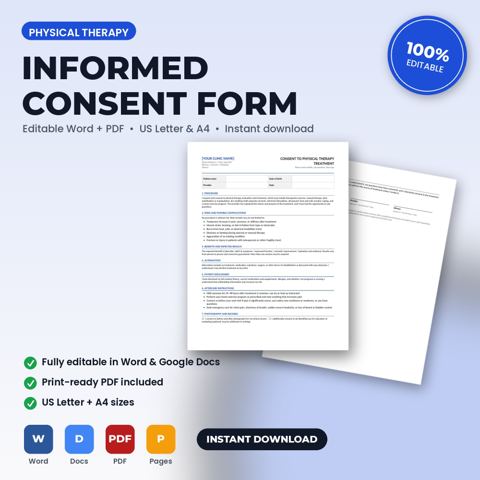
Informed consent for PT should describe the evaluation, the types of treatment that may be used (manual therapy, therapeutic exercise, modalities, dry needling where applicable), risks such as soreness or aggravation, the patient's right to refuse, and the shared responsibility for home exercise. A treatment-specific consent form is defensible; a consent line is not.
The financial policy must explain insurance benefits versus responsibility, visit limits, self-pay rates, and payment expectations at the time of service. Patients who understand their responsibility from the start rarely dispute balances.
Expert: consistency, compliance and reputation across a growing clinic
Front-desk consistency in a PT clinic means insurance verification before the first visit, scheduling the full plan of care up front, reconciling attendance daily and following a check-out script that books the next visit. A written SOP with these steps, plus daily opening and closing checklists, is how a clinic keeps the same experience when the front desk turns over.
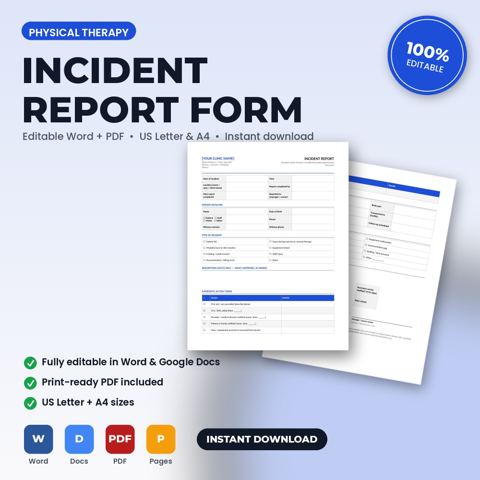
Compliance documentation (HIPAA acknowledgment, workforce confidentiality, incident reports for falls or equipment injuries) is straightforward when the templates exist and frustrating when they do not. Build the packet once.
Reputation drives direct-access referrals. A post-discharge feedback survey and a review request to satisfied patients, delivered by a script the front desk actually uses, produce the reviews that new patients read before choosing a clinic.
Every physical therapy clinic template, explained
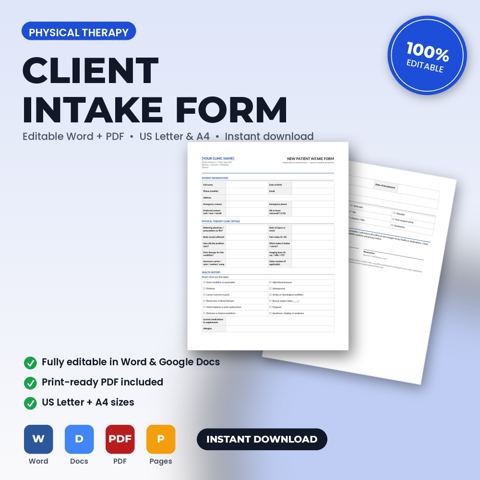
- Physical Therapy Clinic New Patient / Client Intake & Health History Form — Intake form, $9.99
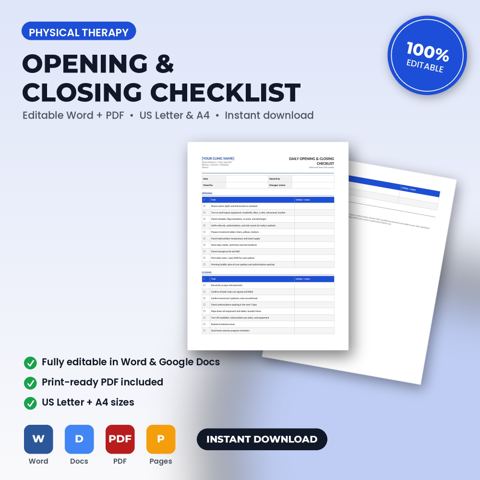
- Physical Therapy Clinic Daily Opening & Closing Checklist — Opening & closing checklist, $8.99
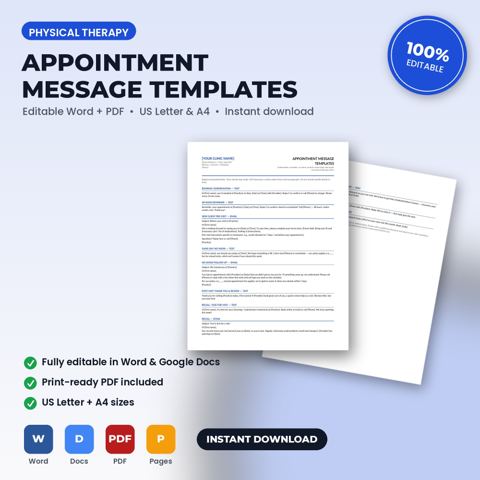
- Physical Therapy Clinic Appointment Confirmation, Reminder, No-Show & Recall Message Templates — Appointment message templates, $9.99
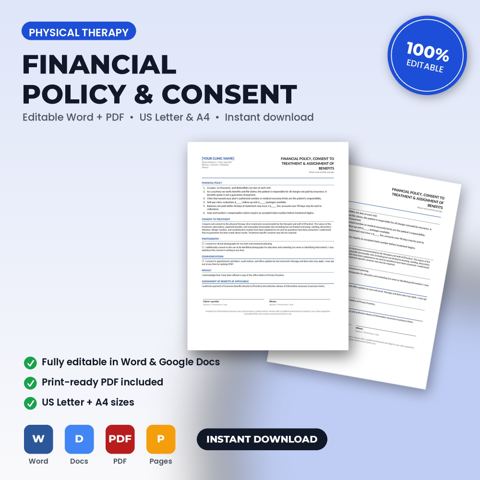
- Physical Therapy Clinic Financial Policy, Treatment Consent & Photo Release — Financial policy & consent, $12.99
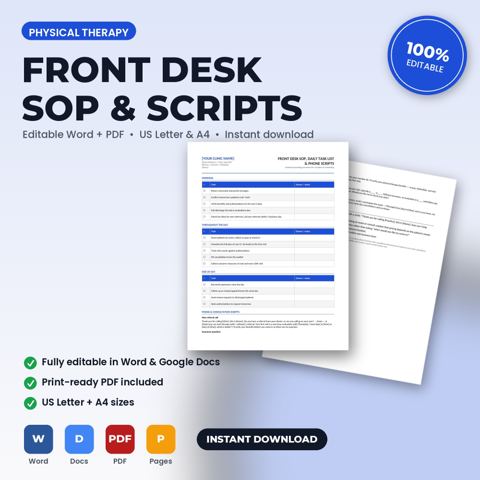
- Physical Therapy Clinic Front Desk SOP, Daily Task List & Phone Scripts — Front desk SOP & scripts, $9.99
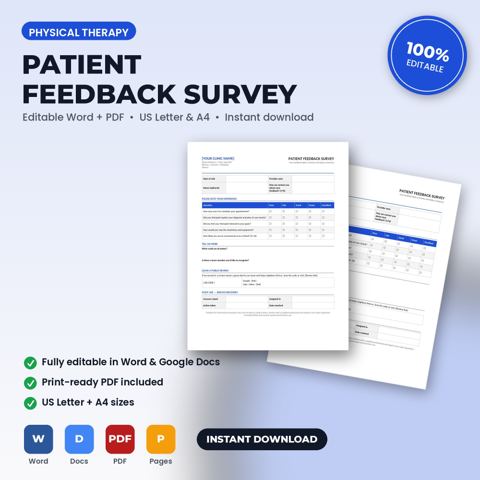
- Physical Therapy Clinic Feedback Survey & Review Request Form — Feedback survey & review request, $8.99
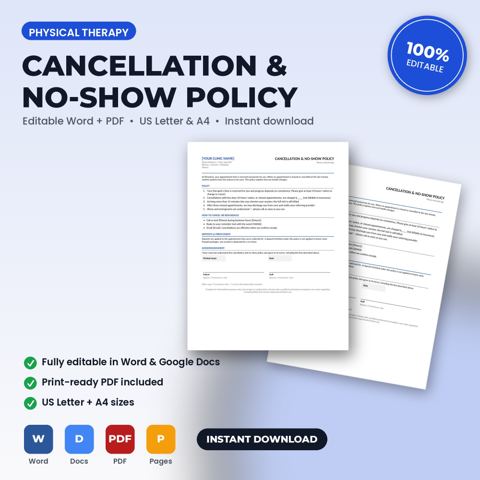
- Physical Therapy Clinic Cancellation & No-Show Policy — Cancellation & no-show policy, $9.99
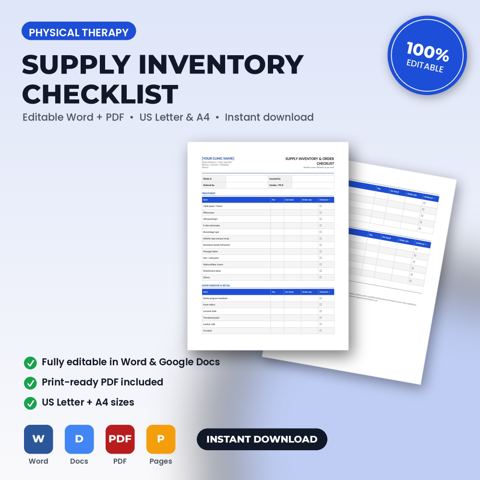
- Physical Therapy Clinic Supply Inventory & Order Checklist — Supply inventory, $8.99
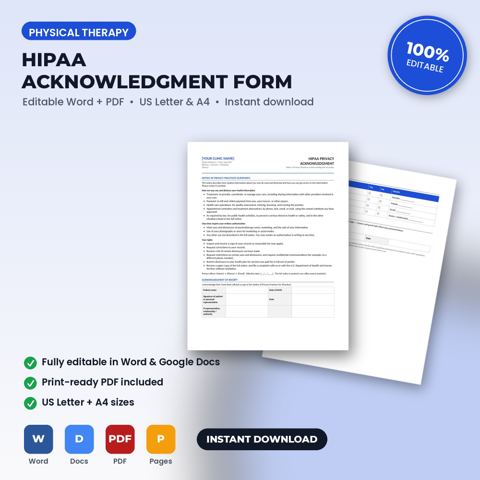
- Physical Therapy Clinic HIPAA Notice of Privacy Practices Acknowledgment & Communication Consent — HIPAA acknowledgment, $9.99
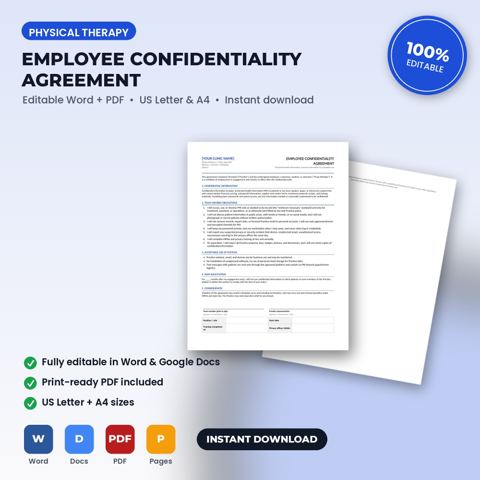
- Physical Therapy Clinic Employee Confidentiality & HIPAA Agreement — Employee confidentiality agreement, $12.99
- Physical Therapy Clinic Incident & Adverse Event Report Form — Incident & adverse event report, $9.99
- Physical Therapy Clinic Treatment-Specific Informed Consent Form — Treatment-specific informed consent, $14.99
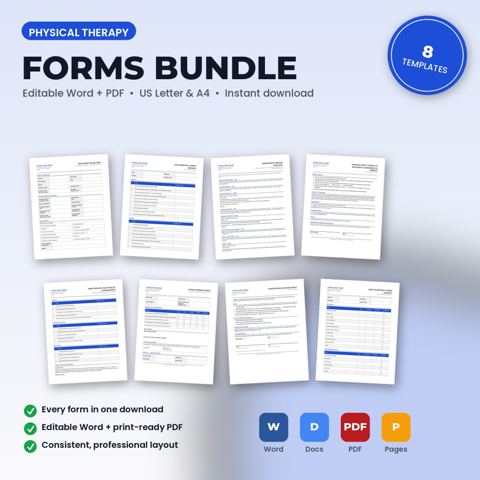
- Physical Therapy Forms Bundle — Forms bundle, $34.99
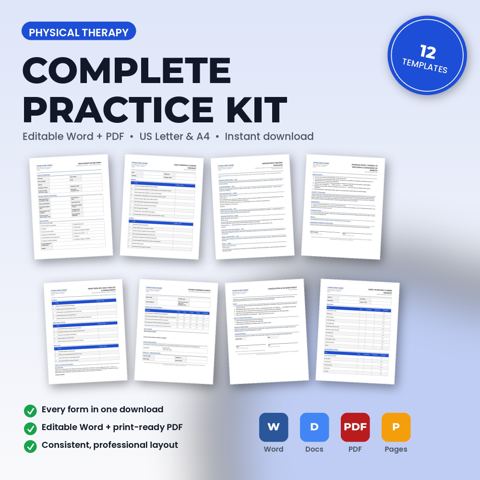
- Physical Therapy Complete Practice Kit — Complete kit, $69.99