What this service agreement does for locksmiths and security installers
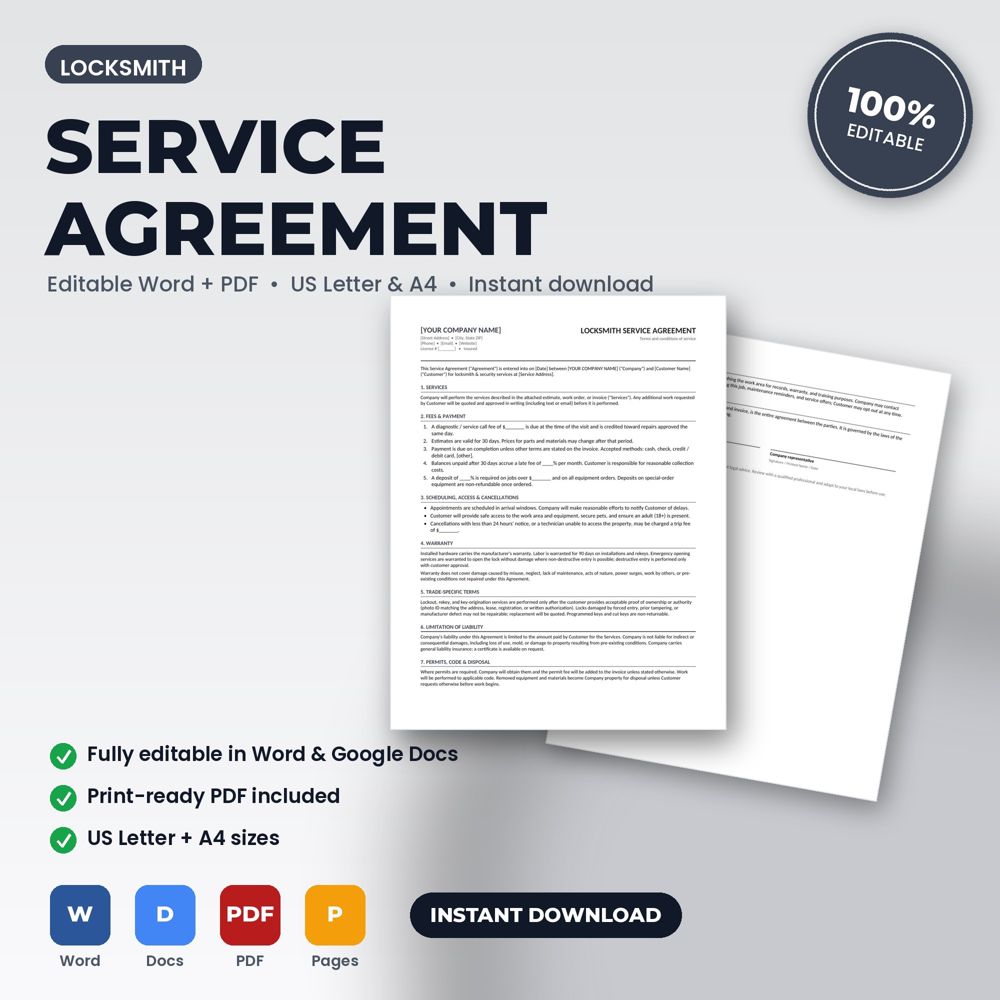
An editable Word + PDF template built for locksmiths, mobile locksmith businesses, and security hardware installers.
This template sets out fees and payment, scheduling and access, cancellations, warranty, trade-specific terms, limitation of liability, permits, photo consent, and signatures. Open it in Word or Google Docs, replace the bracketed placeholders with your name, logo, prices, and terms, and it's ready to use.
The service agreement is the document that protects the business when something goes wrong: a customer refuses to pay, a part fails, a job is cancelled after materials are ordered, or a claim is made for damage. Without written terms, every one of those becomes a negotiation. With them, it becomes a reference to the paragraph the customer signed.
It also sets expectations that reduce conflict in the first place. Customers who know the warranty scope, the payment terms and the access requirements before the job starts are easier to work for.
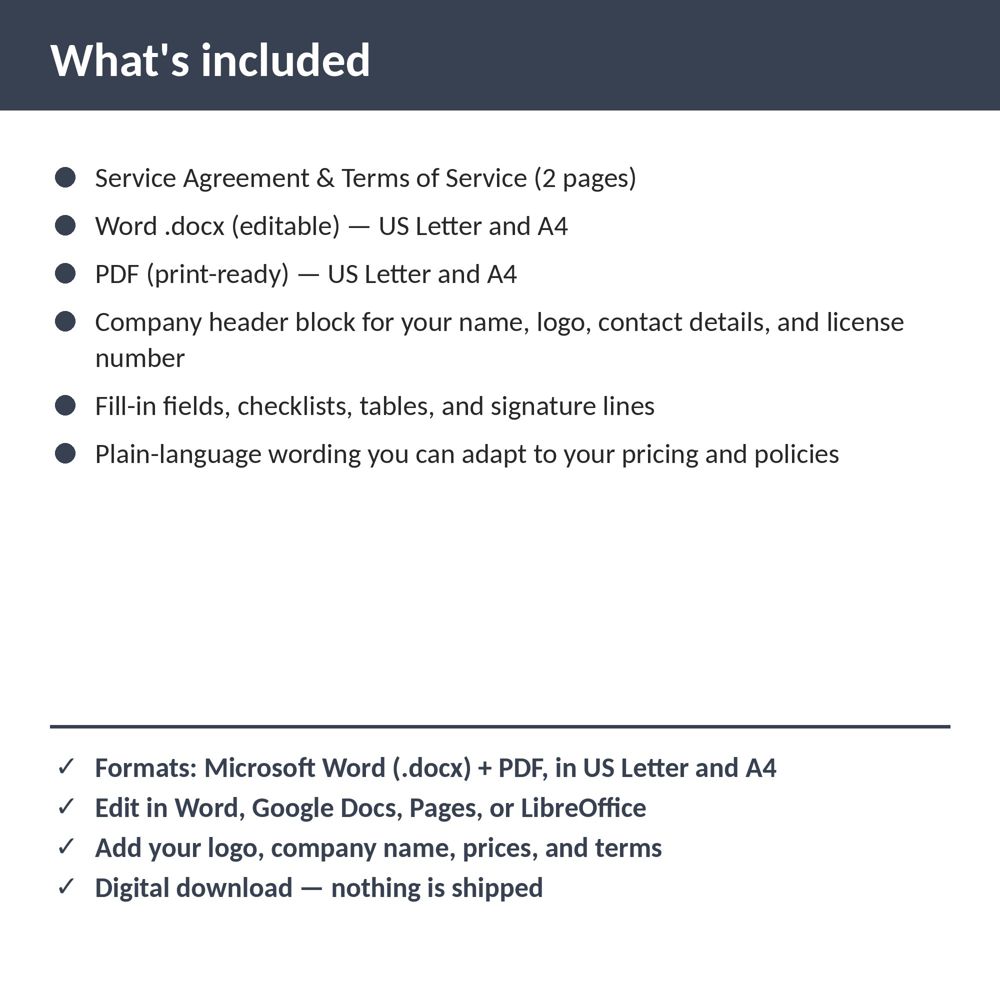
What is inside the template
- Parties, effective date and description of services
- Fees, deposits, payment schedule and late-payment terms
- Scheduling, access and customer responsibilities
- Cancellation and rescheduling terms
- Warranty scope and exclusions (workmanship vs. manufacturer)
- Locksmith-specific terms, permits and hidden conditions
- Limitation of liability, dispute resolution and photo consent
- Signature block for both parties
How to use it (step by step)
- Read every clause once and edit the bracketed choices (notice periods, warranty length, late fee) to match how you actually operate.
- Have an attorney or your insurer review the liability and warranty language for your state.
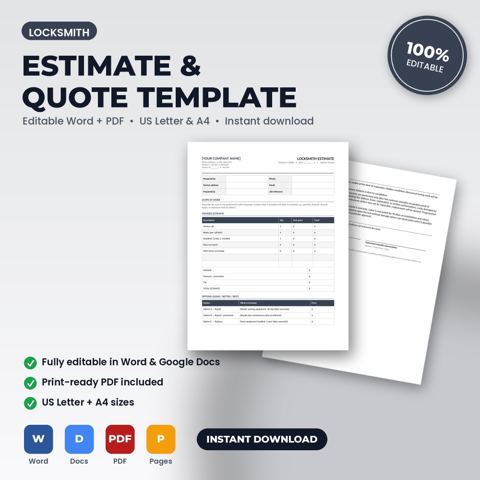
- Use it for installs, larger projects, commercial work and any recurring service; attach the estimate as the scope.
- Store signed copies with the job record for at least the warranty period plus your state's limitation period.
Common mistakes this template helps you avoid
- Using an agreement so long and dense that customers refuse to sign it. Plain language wins.
- Never updating the master after a dispute reveals a gap.
- Signing the agreement after the work has started.
Expert tips from the field
- Keep a two-page version for residential work and a fuller version for commercial accounts.
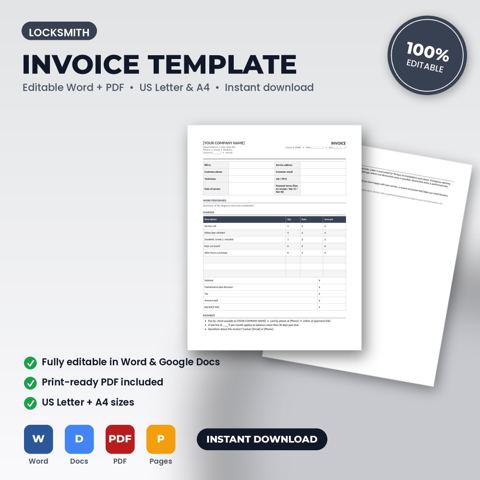
- Reference the agreement number on every invoice; it reminds the customer that terms exist.
- Add a clause about customer-supplied materials; it is the most common source of warranty arguments.
Why locksmiths and security installers choose this over a generic template
Generic forms are written for nobody in particular. This one was written for locksmith and security-hardware businesses: the fields, wording and clauses reflect real locksmith work such as a residential lockout at 2 am or a commercial rekey after an employee leaves. It uses plain language customers can read, it has a header block for your logo and license number, and it matches the other Locksmith templates in the set so your intake, estimate, invoice and agreement documents look like one system.
Explore the full Locksmith template collection and paperwork guide, or see how it fits with the related documents below.