What this treatment-specific informed consent does for chiropractors and office managers
An editable Word + PDF template built for chiropractic offices, associate doctors, and front-desk teams.
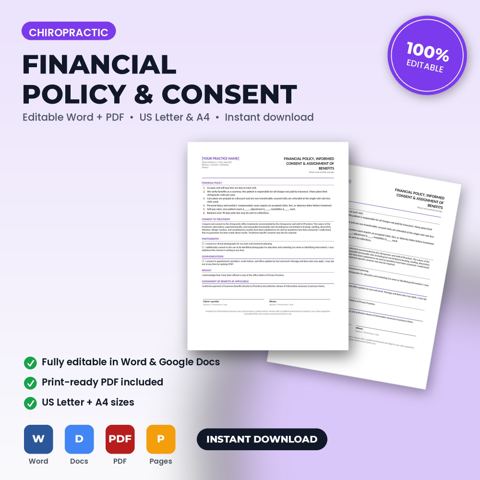
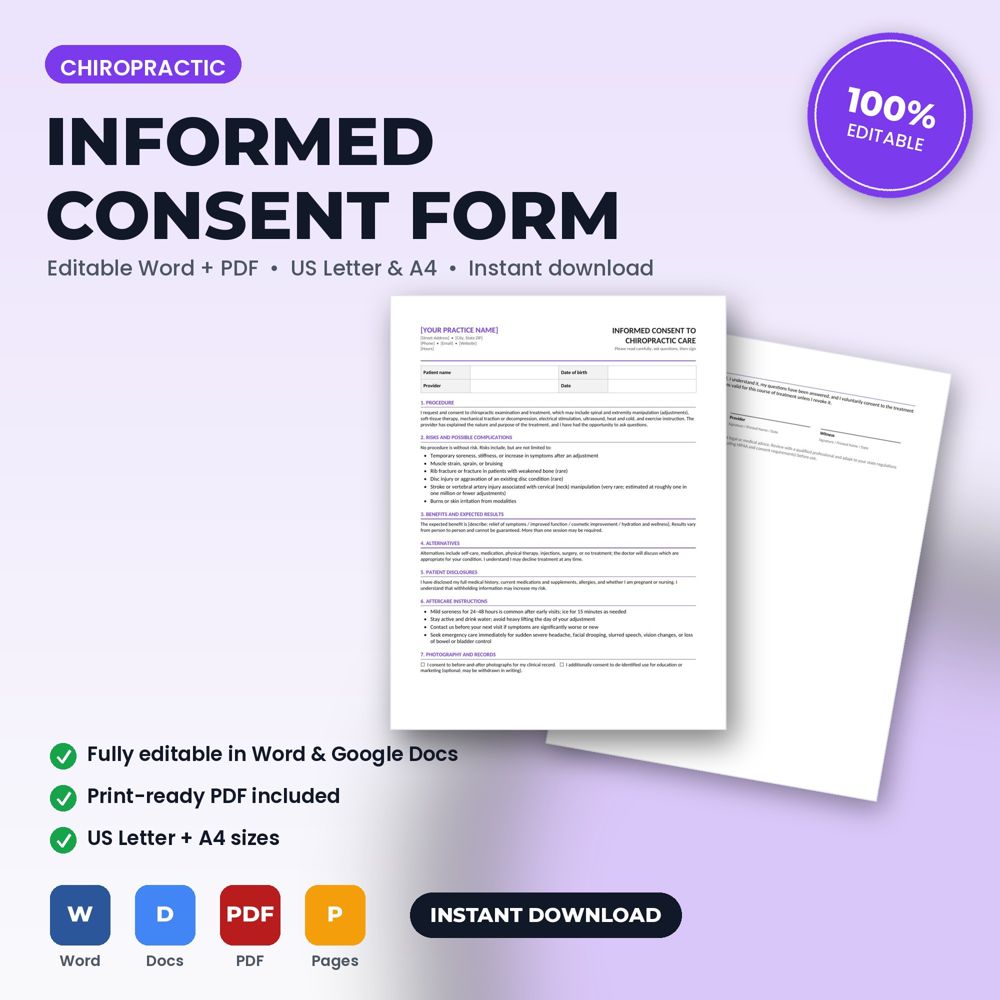
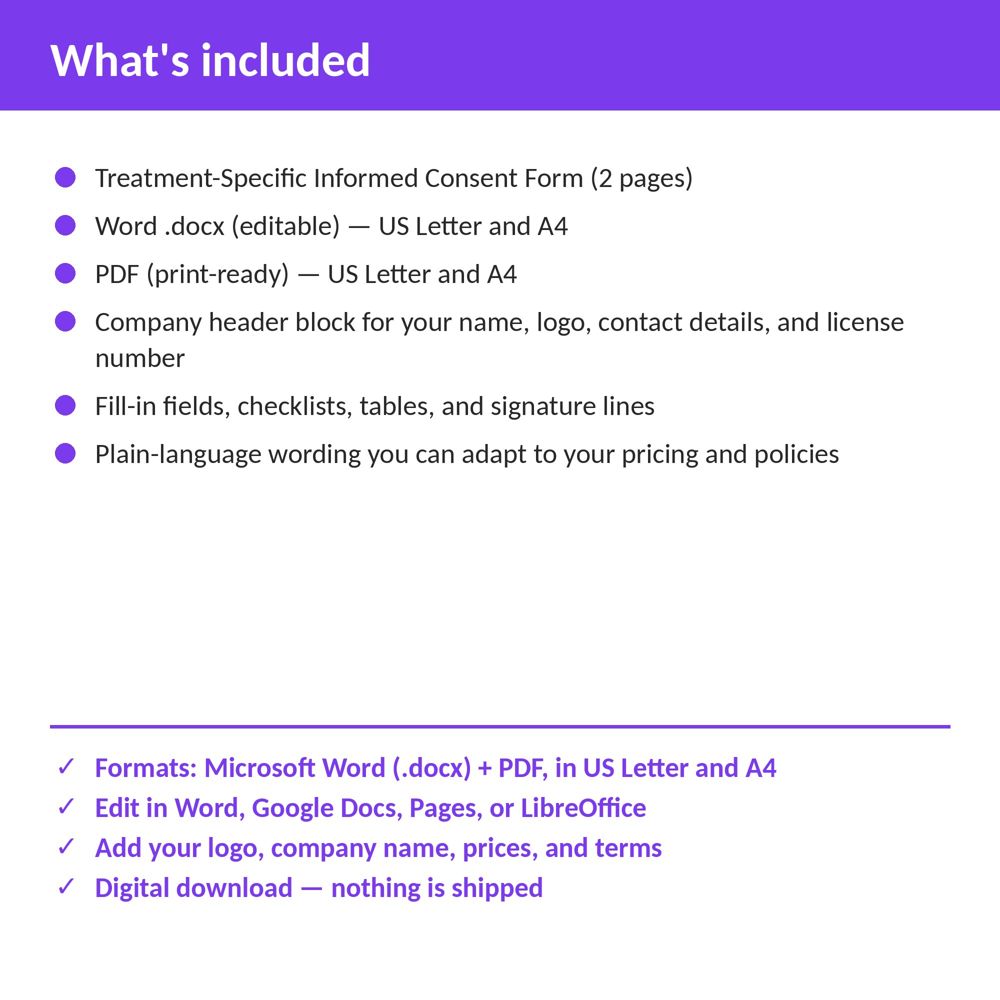
This template walks the patient through the specific procedure, its risks and possible complications, alternatives and the risk of no treatment, aftercare instructions, questions answered, and a witnessed signature block — written for your specialty rather than a generic consent. Open it in Word or Google Docs, replace the bracketed placeholders with your name, logo, prices, and terms, and it's ready to use.
Informed consent is a process, and the form is the proof that it happened. A general consent line is not enough when a specific procedure carries specific risks. A treatment-specific form protects the patient, who receives a clear explanation, and the practice, which has a defensible record if an outcome is poor.
What is inside the template
- Treatment description and expected outcomes
- Editable benefits, common side effects and serious risks lists
- Alternatives, including no treatment
- Aftercare responsibilities and contraindication acknowledgment
- Questions-answered statement, patient and provider signatures, witness line
- Photo/documentation consent option
How to use it (step by step)
- Create one version per treatment you offer by editing the lists.
- Review it verbally with the patient; give time for questions.
- Sign, date and file with the patient record; re-sign when the treatment plan changes.
Common mistakes this template helps you avoid
- Using one generic consent for every procedure.
- Having the patient sign without a verbal discussion.
Expert tips from the field
- Add a line for the provider to note specific risks discussed for this patient.
- Keep consent forms with the treatment record, not in a separate binder.
Why chiropractors and office managers choose this over a generic template
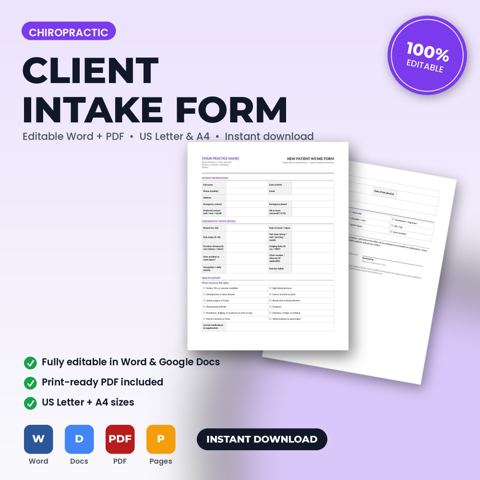
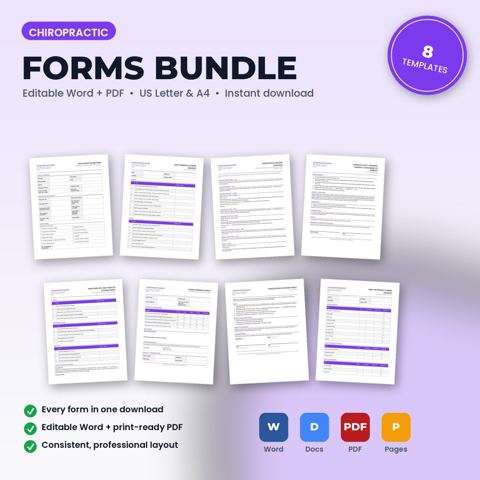
Generic forms are written for nobody in particular. This one was written for chiropractic practices: the fields, wording and clauses reflect real chiropractic office work such as a new-patient exam and first adjustment or a corrective-care plan of 24 visits. It uses plain language patients can read, it has a header block for your logo and license number, and it matches the other Chiropractic Office templates in the set so your intake, consent, policy and checklist documents look like one system.
Explore the full Chiropractic Office template collection and paperwork guide, or see how it fits with the related documents below.